The 23 Basic Comprehension Skills
(Metacognitive comprehension strategies)

The 23 Basic Comprehension Skills
(Metacognitive comprehension strategies)
1. Read smoothly by punctuation interval, pausing at end of the interval. Note: a punctuation interval is all the words to the next comma or other punctuation mark.
2. When your reading stops making sense, back up and read what is there from the start of the punctuation interval.
3. Reread the punctuation interval if you stumbled through it. Note: you only usually understand what you have read smoothly (fluently).
4. Be aware of the music of text as you read. Shorter words usually serve as direction words for other words which are the meaning points in the music. These points are the objects of prepositions, longer words, and words at the end of punctuation intervals. Each short prepositional phrase has it short word(s) and longer object word and make phrasal music. Secondly, each punctuation interval has its own music from start to end. Third, and most important, in each sentence there is a music of the different punctuation intervals, separated from each other by a short pause, and a longer pause at the end of the sentence.
5. Be aware of the Question asked by the first word in each punctuation interval, and how it is Answered by the last word in the punctuation interval. In the pause at the end of each punctuation interval, think about what you just read and make sure you have understood it. Realize that a punctuation interval won’t make sense until you get to the end of it.
6. Relate each punctuation interval to the previous or next punctuation interval, or rest of sentence. Take the necessary time to do this.
7. Understand that reading a sentence is a matter of progression through the words and pausing at the commas and other punctuation points.
8. Limit guessing to phonetic alternatives.
9. Do not project; read what is there; make sure your sound is possible by the text that is written, especially the endings.
10. Use your auditory memory.
11. Use your visual memory.
12. Think about the questions the sentence is asking and then answering.
13. Do not sub-vocalize or lip-read or whisper when reading silently.
14. Tie in what you are reading to titles and sub-titles and table of contents.
15. Do not read too fast.
16. Do not make regressions or other compulsive actions.
17. Look up words you don’t know and develop a definition sheet.
18. Eliminate issues of brightness and contrast and glare.
19. Adjust highlight color or eliminate it.
20. Re-read text at higher speed, trying to state ending before hearing it spoken.
21. Make sure you experience points in charts, diagrams, maps and illustrations.
22. Avoid physical discomfort when reading or typing.
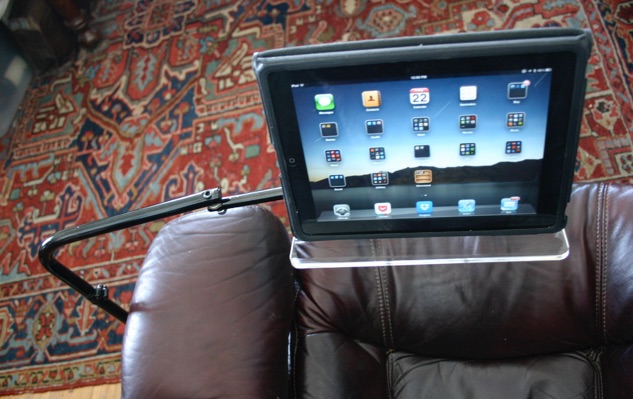
23. Try to read without holding the book or page; type notes while reading, if you wish.
Can you read this?
If so,
we can help you
format
and read any text
like you are reading now.
---
Little eye movement
is required.
---
This approach
is ideal
for Macular Degeneration,
Retinitis Pigmentosa,
Wandering Eye,
and severe Dyslexia.
Call us
for Free initial advice
at 978-927-9234.
Our next approach
is reading
by Phrases
at smaller font size.
We will
also show you
how
to read any
of these text examples
with interactive computer voice.
Reading by Phrases
is ideal
for Beginners (K-4),
severe Dyslexia,
other LD/Special ED,
basic Remedial Reading,
and starting ESL.
Our next approach is reading by Punctuation Interval.
As before,
there is a blank line between sentences and paragraphs,
and all paragraphs are indented,
but individual phrases are not placed on separate lines.
We teach people how to read instantly by progressive cognitive intervals from short to long,
as appropriate for each person,
and with or without computer voice.
Reading by Punctuation Intervals is ideal for all average and good readers, slow readers in middle school and high school,
intermediate remedial reading,
intermediate ESL students,
as well as intermediate Dyslexics,
and all advanced elementary students.
Next are six examples of reading by Sentence.
All parts of the sentence are read as one unit.
Reading by Punctuation Interval or by Sentence, students are able to pause for as long as they want to think about what they have just read.
They can also repeat the sound of each Sentence, or Punctuation Interval as often as desired, before advancing.
Reading this way with interactive, computer voice is ideal for all Average Readers in middle school, high school, and college, all advanced ESL students, advanced ADHD students, and all advanced Dyslexics.
Students quickly improve their reading speed and comprehension, as they do their assigned reading with these techniques, called Proportional Reading.
Students can quickly learn how to read well at 300-500 words per minute, and above.
See more examples of reading by Sentence, or by Punctuation Interval, or by Phrase.
Click Here to see more examples.
If you are serious about improving your reading, call us now for Free help getting started: 1 (978) 927-9234; or e-mail us.
We can help you improve your own reading or that of your child, or relative. With a little help, most people can easily read textbooks, novels and Internet articles quickly and well, with excellent speed, concentration, comprehension, recall and enjoyment, at up to 500 words per minute and above. Read on to learn how to do this quickly and affordably with any book.
Work independently on our program on your own, or have us work one-on-one with you, over the phone or Skype, anywhere in the world, as both of us look at the same text on the Internet. If you choose to work with us, we will tailor our instruction to your exact needs. We will start at just where you are at and move forward. This is the fastest way to improve. We will help you correct the 18 bad reading habits. In order to empower you and teach you transferrable skills for reading any book on your own, we will show you a new way to read any book or Internet article quickly and enjoyably, and with excellent comprehension. You can also combine these two approaches, getting help only as needed.
What you will experience in our approach to reading is a new way to read. You read each sentence just ahead of the spoken sound, pausing at the commas and periods for the sound to catch up. Thus, the sound acts to immediately correct any reading errors, and completely removes any reading anxiety. You adjust the speed at which the voice speaks, from normal speaking rate to over 500 words per minute. At the end of each sentence, the sound pauses automatically for as long as you wish, for you to think about what you have just read, and for as long as you want. Then when you are ready, you press a single key to proceed. You can repeat any sentence as many times as you want before proceeding. You are in complete control. You proceed with full comprehension and focus at the speed your mind processes thought. We also teach you how to improve your reading with other techniques. With a little practice, you will quickly increase your speed up to 500 words per minute and above. You will start to love reading. You learn transferrable skills for reading any book, as you do your assigned reading. Do our Free Demo and go to our Free Training Manual for self-instruction. This approach is ideal for middle school, high school, college, and adult reading for all ages and skill levels.
A special use of this approach is designed to help elementary students and ESL students with decoding, automaticity and fluency. They try to read any section of text out loud, before they interactively press the screen, or a keystroke, to hear it read out loud. They can repeat the sound of this section as many times as they want. The student never leaves a section of text without reading it correctly and smoothly. Help is always available. Reading anxiety disappears. Instead of guessing and rushing ahead, students immediately start to focus on reading correctly.
We teach you how to master a new type of reading. We train you in a new way to use the software that you already have on your iPad, iPhone, iPod Touch, Mac laptop, or Mac desktop computer, or on your PC (including software that you can download for free). The first part of the training teaches setup and operation of the controls for this new type of reading. The second part of the training teaches you how to improve your reading using these controls and this new approach. You can do the two parts of instruction in whichever order you prefer. You will learn how to use this approach to read almost any article on the Internet or any textbook or novel, at the speed you think, up to and above 500 words per minute. Besides completing assigned reading, you will overcome the 18 Bad Reading Habits and develop transferrable skills for reading regular books. You will begin to love reading.
Learn About Our Software. Order Now.
Experience the Joy of Reading Well
iPad/Book Chair Stand for “Hands Free” Reading
You can not read well if you are in pain or discomfort.
Questions Answered On This Site
Seven Misconceptions about Reading Improvement
Turn Reading into a Video Game
Help For Good Readers (to increase reading speed)
Help For English As A Second Language (ESL)
Help For Learning Disabilities and Physical Challenges
Help For Macular Degeneration, Retinitis Pigmentosa, and Wandering Eye
Overview for Students on Where To Begin
Overview for Parents, Teachers and Administrators
Improve Reading Concentration and Recall
Try Out Reading Textbooks & Novels with High-Speed Computer Voice and Text
(For ALL students to read with improved comprehension, speed & enjoyment)
Take Our 2-Hour Course with 1on1 Instruction
The Nine Major Benefits of Using Proportional Reading
Homeschooling Help with Reading
Ten Perspectives on Proportional Reading (Grant Application)
Quickly Master Teachers’ Notes and Powerpoint Shows
Special Tools for Writing, Note Taking and Vocabulary
Download Our Free Book for Learning English
Adjustable Neck Strap for Your iPhone
Easily Read and Listen to Textbooks as You Exercise
Reading Aids for Your Wheelchair
Assistive Reading Devices for the Disabled, Elderly, and Low Vision
Specialized Book Holders for “Hands Free” Reading
Free Thank-You Gift for Visiting Us
Tell your Teachers and Friends about this site.